
K-Mag® and its importance in the production of Palm Oil

The cultivation of Elaeis guineensis palm oil originated in West Africa, with Southeast Asia currently the largest producer. Latin America, for its part, has been increasing its areas sown thanks to the favorable agroclimatic conditions in its tropical strip. Palm is the most important crop in the production of vegetable oil worldwide. Its nutritional requirements are relatively high and traditionally grown in low fertility soils. Therefore, it is essential to supplement the supply of nutrients by applying fertilizers.
Potassium
It is an enzyme activator and biochemical catalyst involved in the synthesis of starches, proteins and fats. The proper nutrition of K increases the resistance of the crop to drought, to diseases and also increases the number of clusters and their weight. K deficiency in young plants is known as “flat bud” because the leaves that emerge are getting smaller. In adult palms, orange spotting is the most common symptom of deficiency. The ideal concentration of foliar K depends on the cultivar, plant age and sowing density (Teoh and Chew, 1988). It is reported that, for leaf #17, the optimal K range for palms under six years of age is 1.1-1.3%, and in larger palms it is 0.9-1.2% (Fairhurst and Hardter 2003).
Magnesium
This nutrient is the central atom of the chlorophyll molecule which is the pigment that gives the green color to plants. Therefore, magnesium (Mg) is essential for photosynthesis, a process by which plants convert carbon dioxide and water into simple sugars. Mg deficiency disrupts protein synthesis and therefore oil formation. Mg-deficient leaflets become chlorotic and accentuate to an orange color in older basal leaves (Goh and Hardter, 2003). Mg deficiency has a “shadow” effect; where leaves in the shade maintain green coloration and those exposed to the sun show deficiency. The appropriate supplement of Mg determines a significant increase in the oil content in the mesocarp (Prabowo and Foster, 1998), as a result of the reduction of starch in the plant storage organs. The optimal range of Mg in the #17 leaf for palms under six years old is 0.30-0.45%, and for major palms is 0.25-0.40% (Fairhurst and Hardter, 2003).
Sulfur
It is a constituent of essential amino acids (cysteine and methionine). Structural nutrient of coenzymes necessary for the formation of oil that is stored in the seed mesocarp. Symptoms of deficiency are more common in young plantations planted in well-drained, sandy, low-organic-protein soils, with young leaves seeing brown circles they necrotize. S-deficient plants are more susceptible to attack by Cercospora spp (Calvez et al., 1976). The optimal range of S on the #17 leaf for palms under six is 0.25-0.40%, and for major palms is 0.25-0.35% (Fairhurst and Hardter, 2003).
Nutritional relationships:
Proper crop nutrition is only achieved when concentration and balance between all nutrients is reached. The starting point is the knowledge of the concentration of these in the soil. For K and Mg it is necessary to supplement them when the content is less than 0.2 cm kg-1 in both cases (Cristancho et al., 2012). Furthermore, it has been determined (Table 1) that the ratio N:Mg in sheet #17 has an effect on the expression of Mg deficiency symptoms. The application of high doses of N raises the levels of this nutrient in the leaves to more than 2.8% and reduce Mg levels to less than 0.24%, which results in a decrease in leaf growth and the appearance of deficiency symptoms expressed with an orange color in the leaves (Goh and Hardter, 2003). Mg applications, in the absence or low supplement of K, limit performance. In addition, other studies show that increases in oil yield (Figure 1) as a result of nutrition with K, are higher when applied in the correct dose and together K and Mg (Ochs, 1977).

Table 1: Interaction between potassium and nitrogen with magnesium and its effect on leaf yield and length.
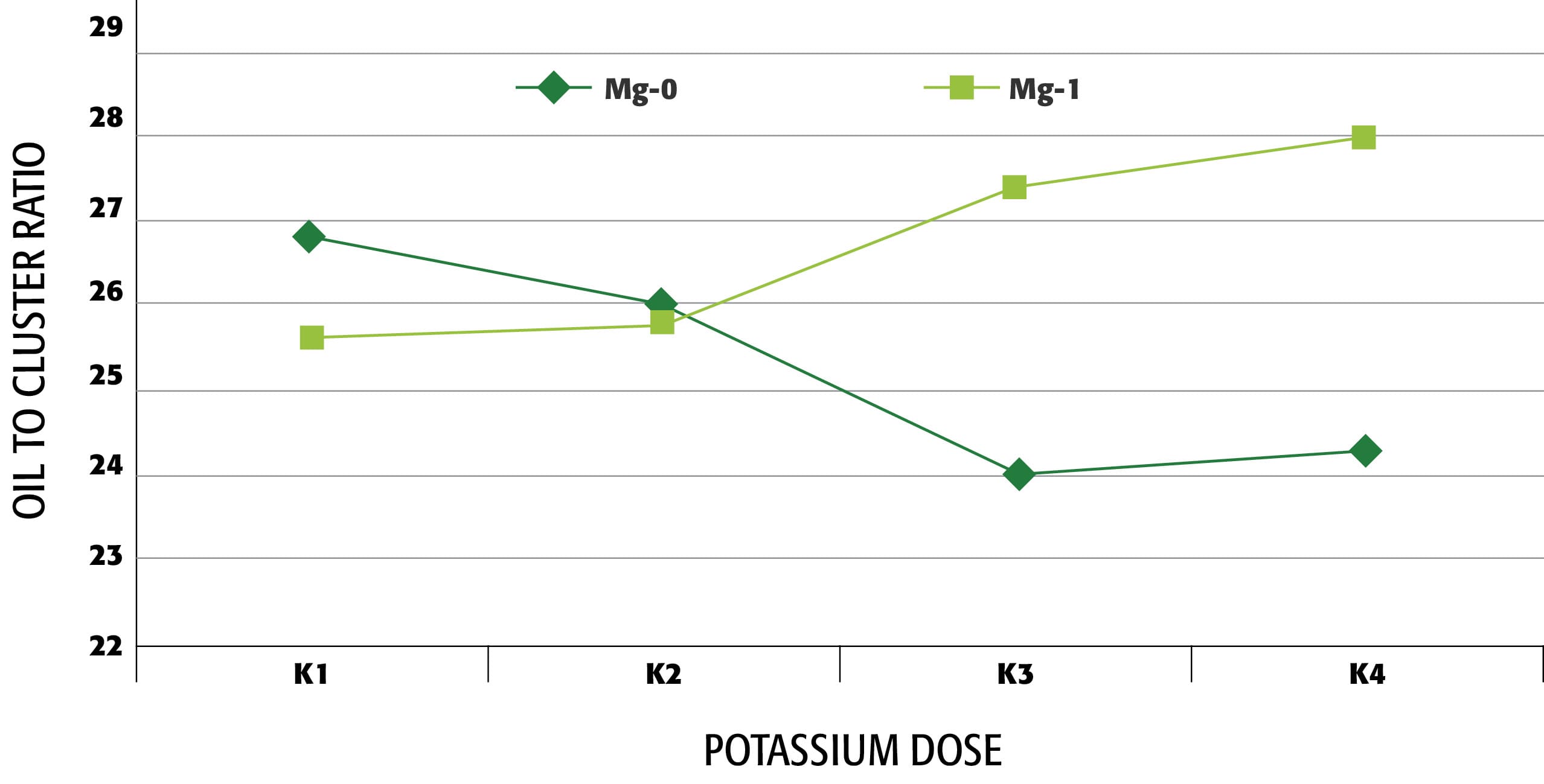
Figure 1: Interaction between K and Mg in Oil:Cluster
Dose of Potassium (K2O) in kg palm-1; K1: 0.3; K2: 0.9; K3: 1.8; K4: 2.7.
Magnesium (MgO) dose in kg palm-1; Mg-0: 0; Mg-1: 0.135
Based on the above results, a nutrition program (Table 2) based on the leaf analyses (Leaf #17), applying potassium chloride (KCl), as a source of K and double potassium sulfate and magnesium (K-Mag®), is proposed as a source of Mg, thus ensuring an appropriate balance between K and Mg. Obviously the doses may vary depending on the region and the agronomic management of the crop.
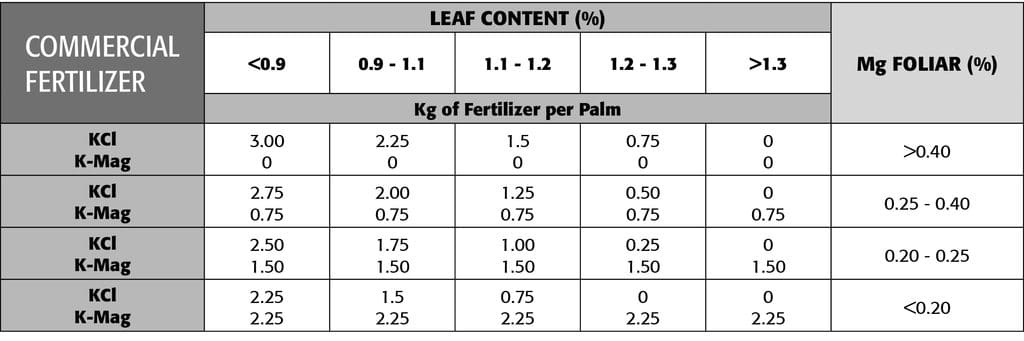
Table 2: Nutrition program for palms older than 5 years of age. Based on the leaf content (sheet #17) of potassium and magnesium (Adapted from Hagstrom, 1988).
Bibliography:
Calvez, C., Olivon, J. and Renard. J.L., 1976. Etude d’une deficience in soufre sur jeunes palmiers à huile in Côte-d’Ivoire. Oléagineux, 31 (6) : pp. 251-257.
Cristancho J. A., Alfonso, O.A., and Molina D. L., 2012. Review of literature on soil paper and plant nutrition in oil palm bud rot. Revista Palmas 33 (2): 9-22. Bogota.
Fairhurst, T and Hardter, R. 2003. Oil Palm: Management for Large and sustainable yield. PPI/PPIC and IPI, Singapore. 384p.
Goh, K.J. and Hardter, R. 2003. General Oil Palm Nutrition. In: Oil Palm: Management for large and sustainable yields (Fairhurst, T. and Hardter, R., eds.). Potash and Phosphate
Hagstrom, G.R., 1988. Fertilization of oil palm with secondary nutrients. V Mesa Latinoamericana Palma Aceitera. Santo Domingo de los Colorados, Ecuador.
Institute (PPI), Potash and Phosphate Institute Canada (PPIC) and Int. Potash Inst. (IPI), Singapore: 191-230
Lim, K.C. and Chan, K.W. 1995. The anionic effects of the chloride and sulphate on growth and yield of oil palm. In: Jalani, S., Darus, A., Tayeb, M.D., Paranjathy, K., Wahid, M.B., Henson, I.E. and Chang, K.C. (Editors) International Palm Oil Congress. Kuala Lumpur, 1993. Pp 351-359.
Ochs, R. 1977. The effect of fertilizers on the yield and composition of lipids in some tropical crops. In: International Potash Institute (ed.) Fertilizer Use and Production of Carbohydrates and Lipids. 13th Colloquium of the International Potash Institute. York, UK, 1977. International Potash Institute, Basel, Switzerland, pp.269–293.
Teoh, K.C. and Chew, P.S. (1988) Potassium in the oil palm eco-system and some implications to manuring practice. In: Hj Hassan, H.A.H., Chew, P.S., Wood, B.J. and Pushparajah, E. (eds.) International Oil Palm/ Palm Oil Conferences: Progress and Prospects. Conference I: Agriculture. Kuala Lumpur, 23–26 June 1987. PORIM, ISP, pp.277–286.