
K-Mag® Water Solubility

Are K-Mag® products water soluble? Are K-Mag nutrients available for plants?
The observed solubility of K-Mag products is influenced in field applications by several factors, including soil moisture and crop growth conditions, fertilizer mixing characteristics, particle size and application dose.
K-Mag is derived from Langbeinite, a mineral that is composed of three water-soluble nutrients, in the form of K+, Mg2+ and SO 4 2[2]. This balance of nutrients provides a powerful source of nutrition for crops throughout the field, improving crop health and success [1]. Langbeinite is water-soluble and dissolves at a more controlled rate compared to other common potassium fertilizers, this because its particles are denser than other sources of potassium [2]. All K-Mag products contain smaller amounts of water-insoluble clays, which are a natural component of the extracted mineral. Mosaic reports that the water solubility of K-Mag is 240 – 300 g/L at 22°C (72°F) [3] for all K-Mag products.
The solubility of the fertilizer has a determining effect on the rate of release of nutrients to crops [4]. The solubility characteristics of potassium (K), magnesium (Mg) and sulfur (S) contained in K-Mag Premium, K-Mag Granular and K-Mag Standard were characterized as part of a comprehensive study developed by the Mosaic Fertilizer Technology Research Center at the University of Adelaide, Australia [4]. Industry standard column perfusion laboratory testing methods and elemental analysis methods through Inductively Coupled Plasma and Optical Emission Spectroscopy (PAI-EEO) demonstrated that the dissolution rates of K, Mg and S were slightly slower for K-Mag Granular (Figure 2) compared to K-Mag Premium (Figure 1), probably due to K-Mag Premium (Figure 1) The dissolution rates of K, Mg and S of K-Mag Standard (Figure 3) were similar to K-Mag Premium, where 100% of the nutrients dissolved in 10 hours [4]. Although K-Mag Standard has a crystal structure similar to K-Mag Granular, the average particle size of K-Mag Standard is smaller, resulting in a more accelerated dissolution rate of K, Mg and S.
The observed differences in solubility between K-Mag Premium, K-Mag Granular and K-Mag Standard are irrelevant to the agronomic performance of products in the field because the analysis confirms that they are all water-soluble and can be completely dissolved in the soil.
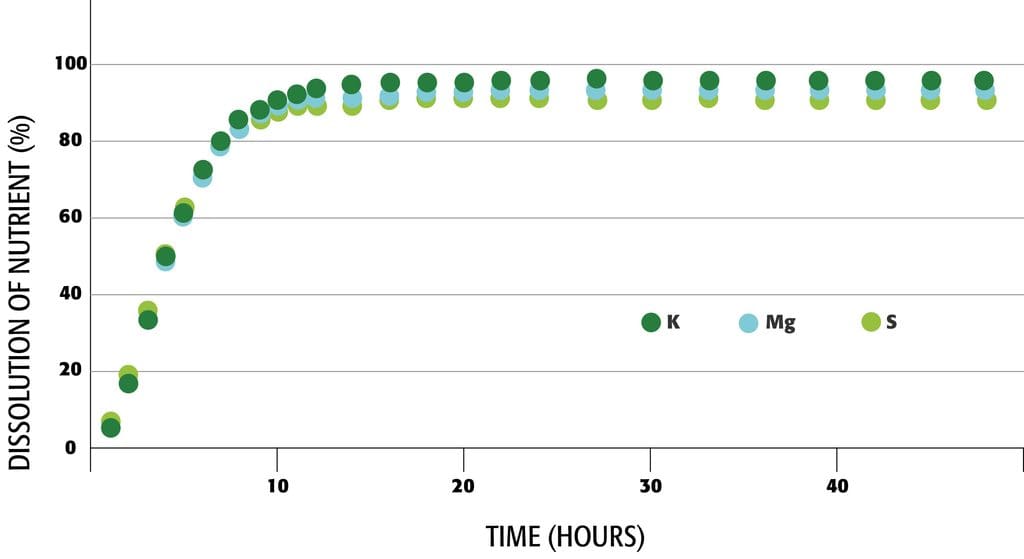
Figure 1. Solubility of K, Mg and S in K-Mag® Premium [4]
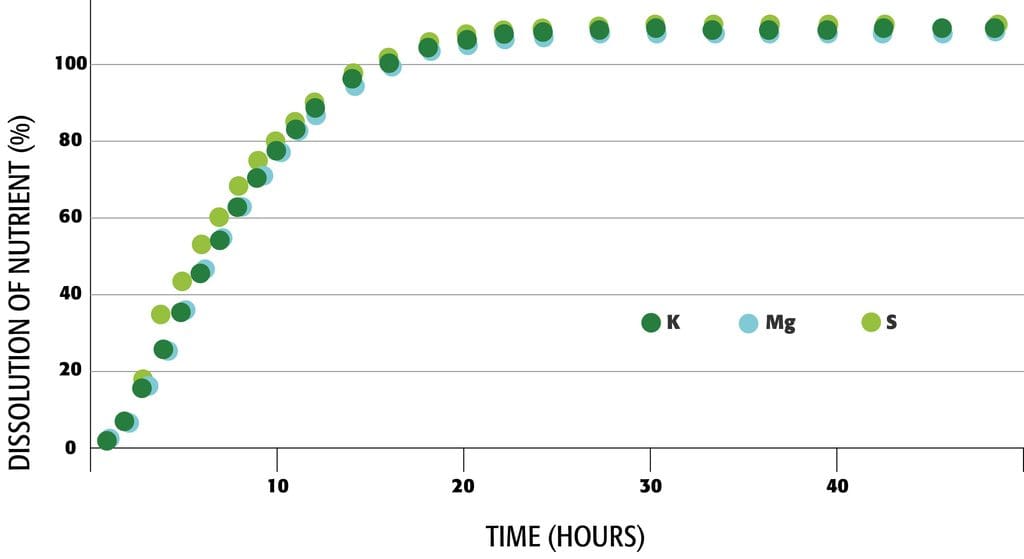
Figure 2. Solubility of K, Mg and S in K-Mag® Granular [4]
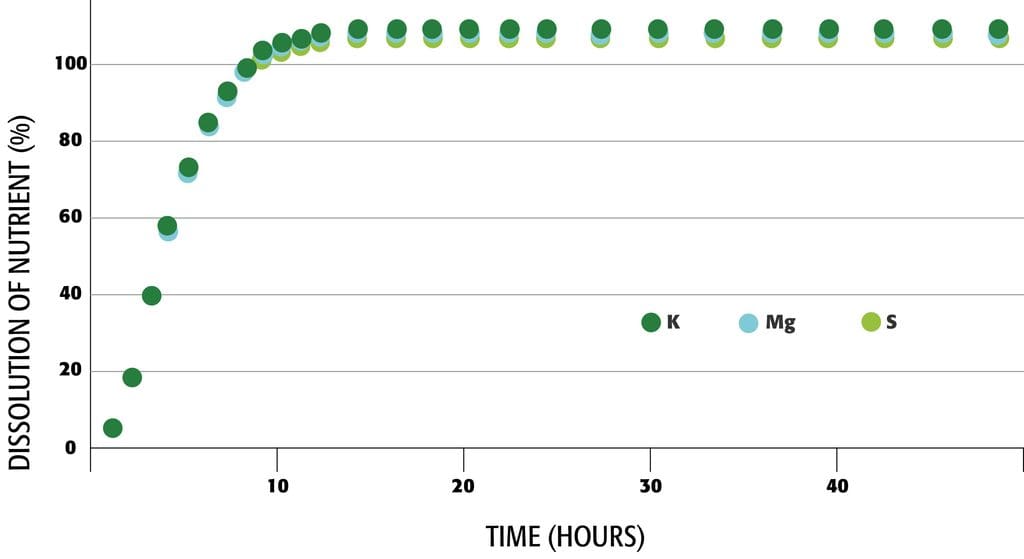
Figure 3. Solubility of K, Mg and S in K-Mag Standard [4]
Contact the K-Mag sales team at International Minerals Carlsbad for additional information: Mark.McDonald@kmag.com
References:
1. International Minerals Carlsbad How it Works [Online] // Kmag.com/K-Mag
2. International Plant Nutrition Institute Nutrient Source Specifics, No. 6, Potassium Magnesium Sulfate: Langbeinite [Online] // www.ipni.net. – Ref # 10066.
3. International Minerals Carlsbad Safety Data Sheet, K-Mag, all grades [Report] – SDS # IMC 260001.